Remote Title Review
The challenge:
After discovering that over 30% of all titles were returned for corrections, I designed a solution that not only improved the lives of our customers, but also increased scalability of the product, and reduced costly churn for the company as a whole.
Highlights:
User research, high-fidelity prototypes, user testing, developer collaboration, figma auto layout and components, clean file delivery, design system contributions
What is MaxOffer?
MaxOffer is a rapidly growing product on CarMax’s supply side of their business. The tool allows dealers to appraise vehicles and instantly sell their vehicles to CarMax. This is mainly used for customer trade-ins that don’t match the dealership’s product line.


My approach
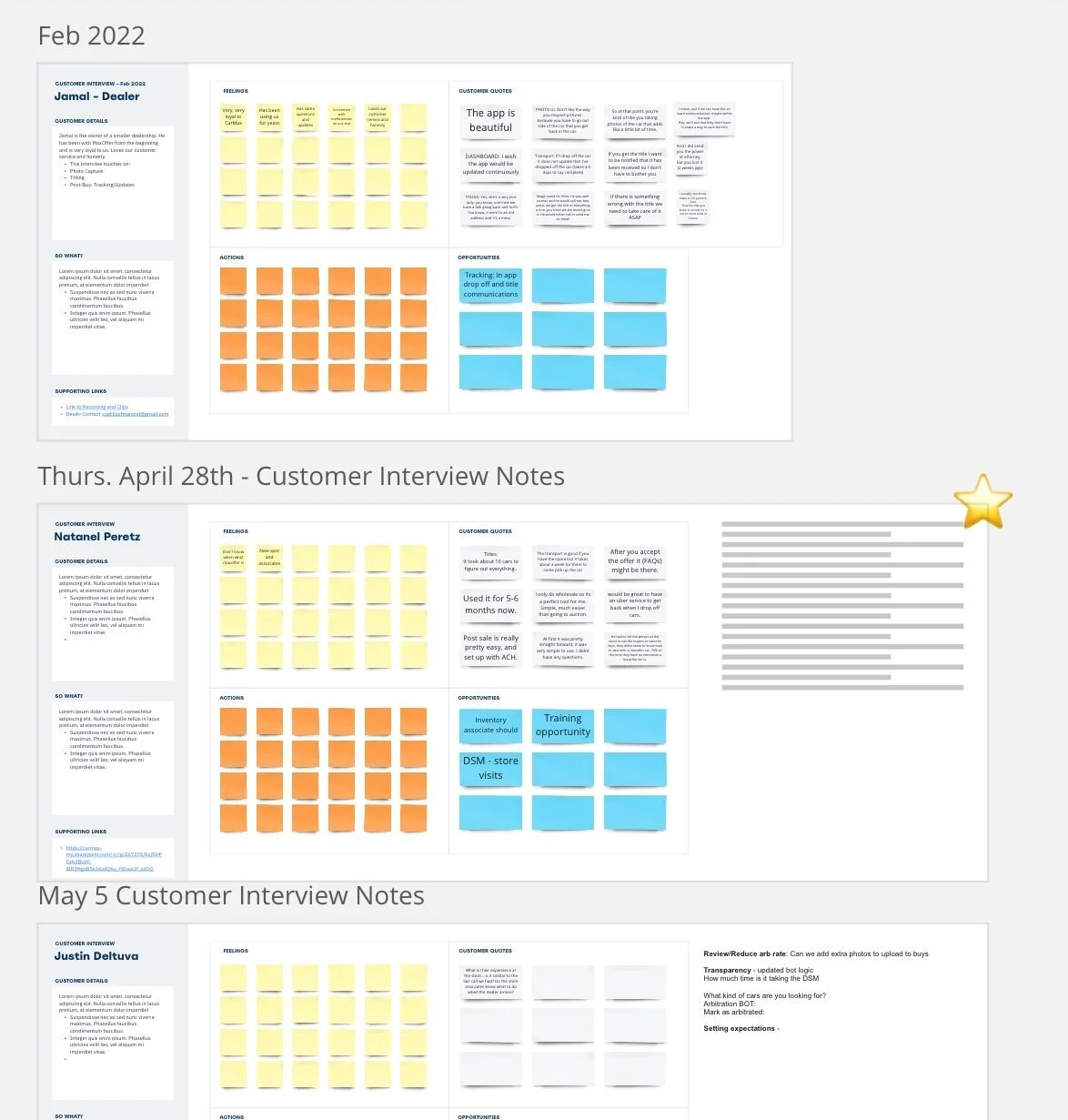
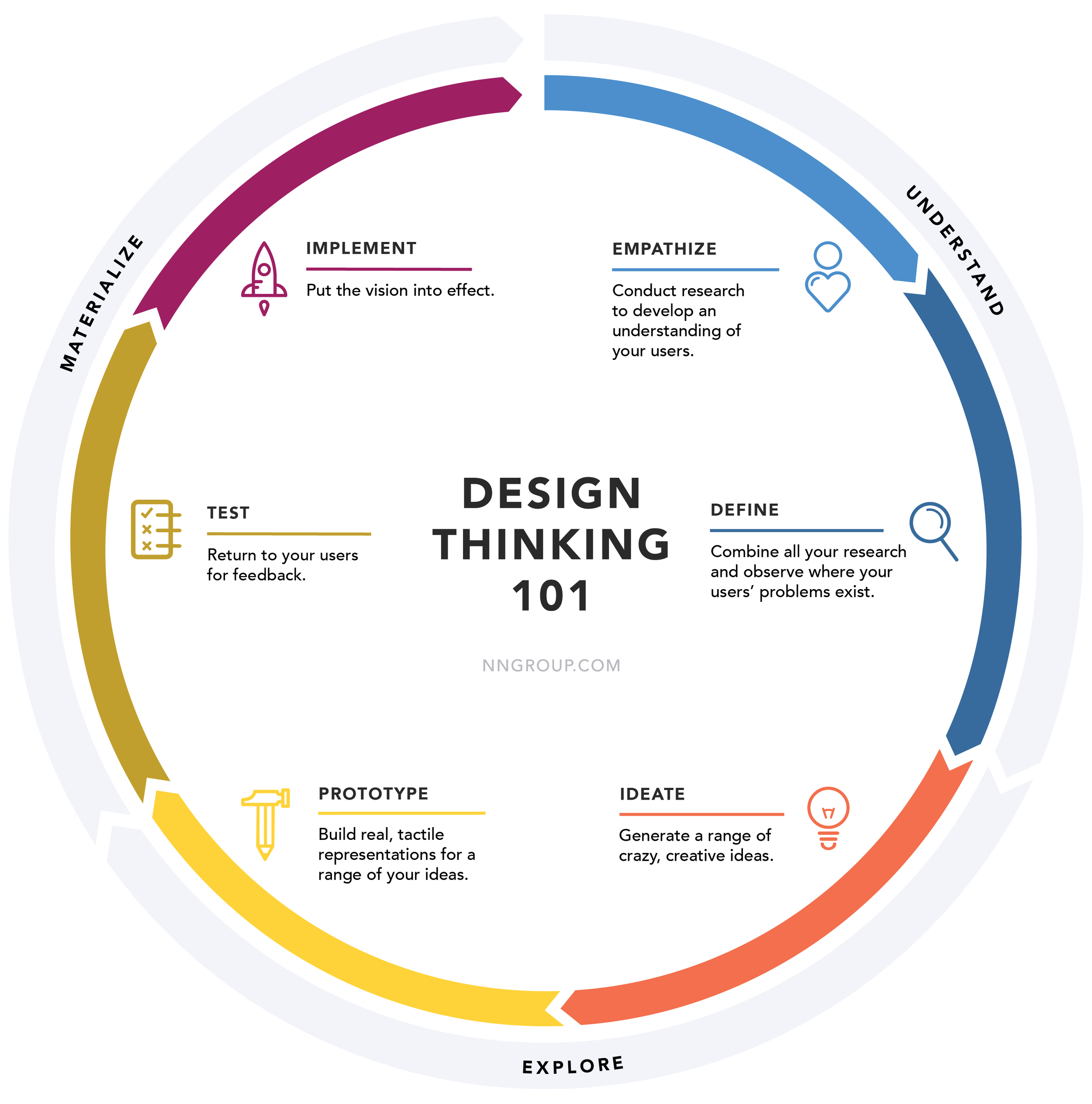
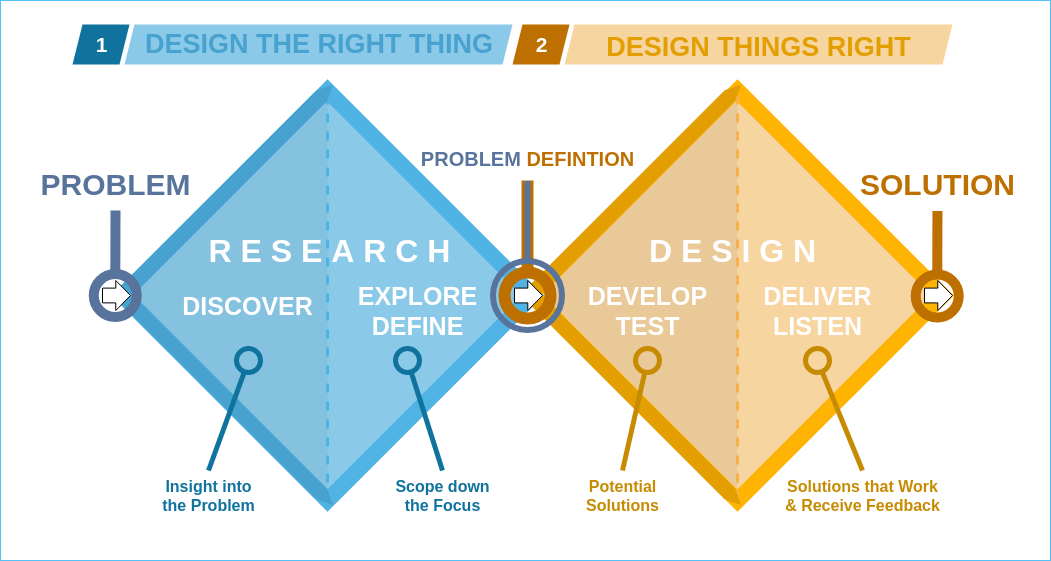
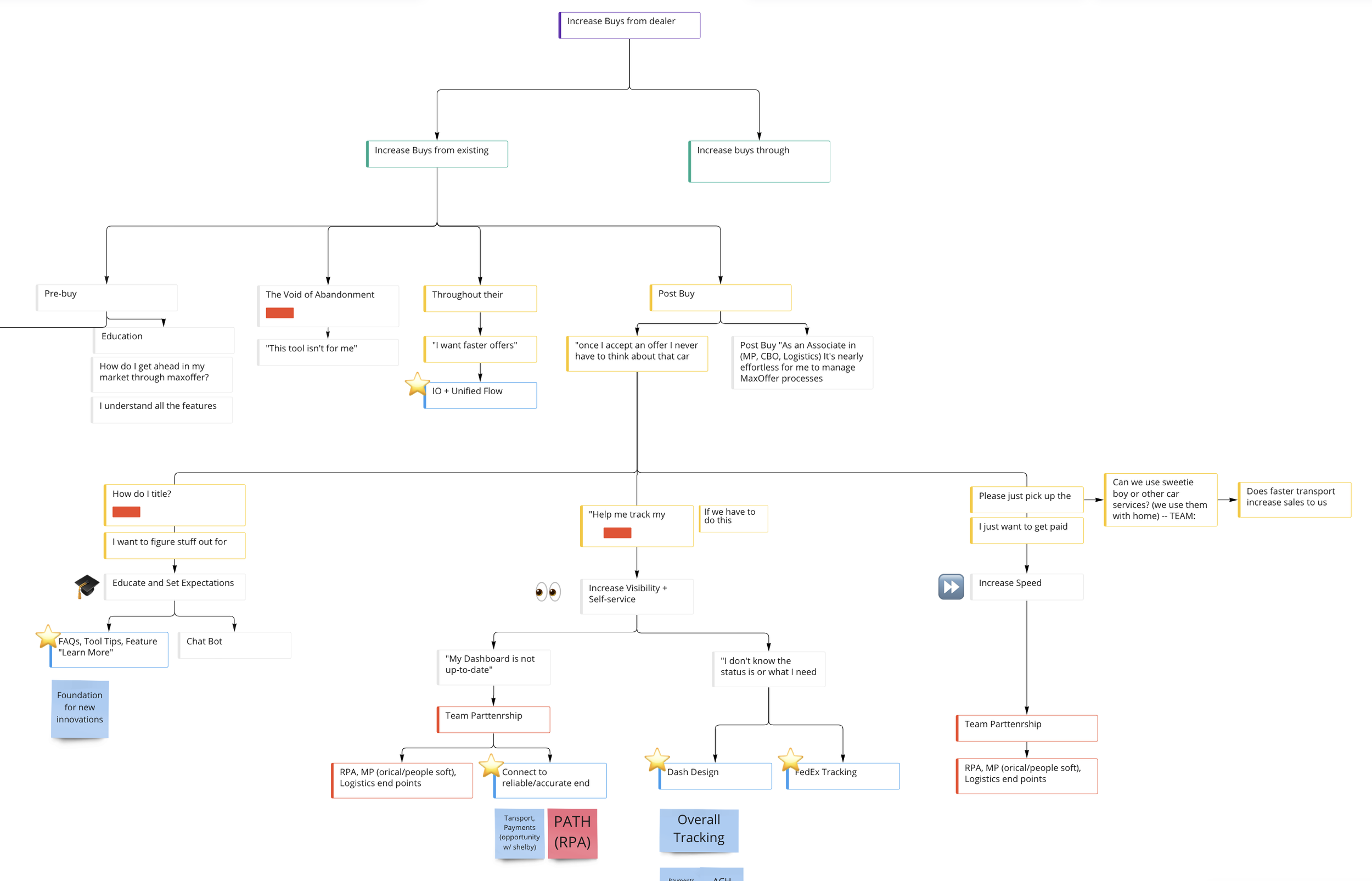
Like many products, MaxOffer has a long list of opportunity spaces. Using continuous discovery and design thinking strategies, my team and I rapidly delivered value while building a roadmap for its future success.
Define
What came up over-and-over again in my weekly discovery calls, was dealers’ frustration with the title fulfillment process. After listening to our dealers frustrations, I worked with our analyst, and we found that over 30% of all titles we receive from dealers were returned back to the dealer for corrections.

“I never know if I’ve filled out a title correctly.”
“CarMax is too picky. Almost half of my titles get returned to our office.”
“We don’t get paid until you receive the title so any delay really hurts our business.”
“Title returns were even worse when we first started.”
Dealer pain points = CarMax pain points
Because CarMax covers title shipping costs for our dealers, title errors increased the product’s operational costs and slowed MaxOffer’s ability to scale.
Ideate

How might we reduce title errors and save our dealers time and money?
Design
Working in close collaboration with the business office team, I:
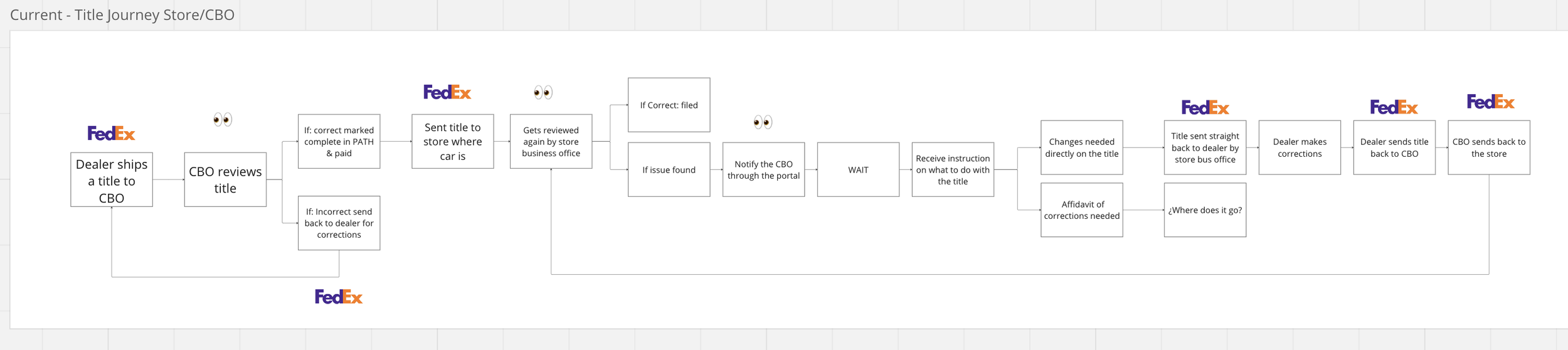
Observed current process
Mapped out the user journey
Identified necessary requirements and needs for the designs
Built a high-res prototype in Figma for testing
Observations
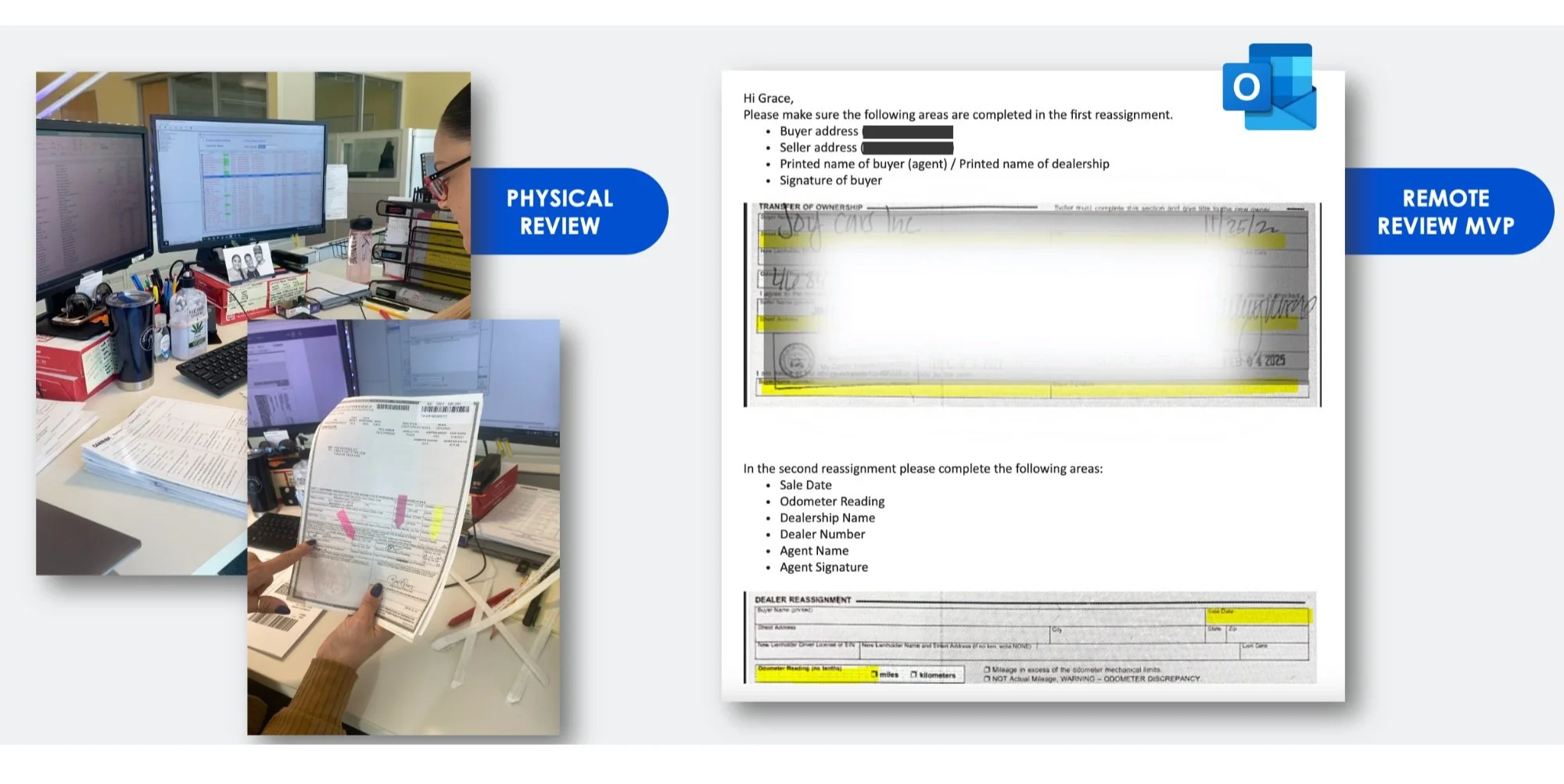
Before jumping into designs it was important to understand the current process to make an analog process digital.
There, I discovered that dealers were already sending titles via email for review. While this was not a scalable solution, this creative workaround showed an appetite for a digital review before shipment.
Discovery & journey mapping
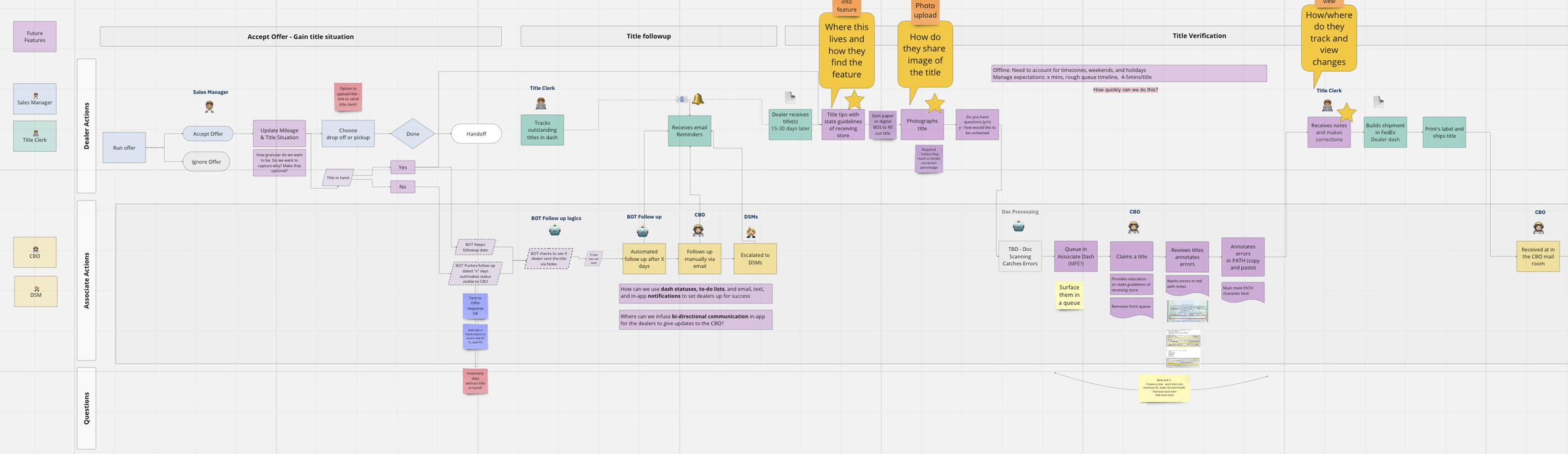
By facilitating multiple journey mapping sessions with our internal teams, I was able to map out the current process and create a future journey that allowed them to meet the necessary legal and process requirements for remote title review.
Hi-fidelity prototype testing
By building a high-fidelity prototype in Figma, I was able to get the product in the hands of our associates to test and refine usability and in-app messaging. This also helped when collaborating with developers on feasibility and requirements.
Figma auto layout & component usage
Working with advanced features in Figma like components and auto layout, I was able to create scalable designs that allowed me to easily make changes across the entire flow as I conducted usability tests.
I was able to leverage the principles of atomic design, using atoms from our design system to create larger patterns within the page.
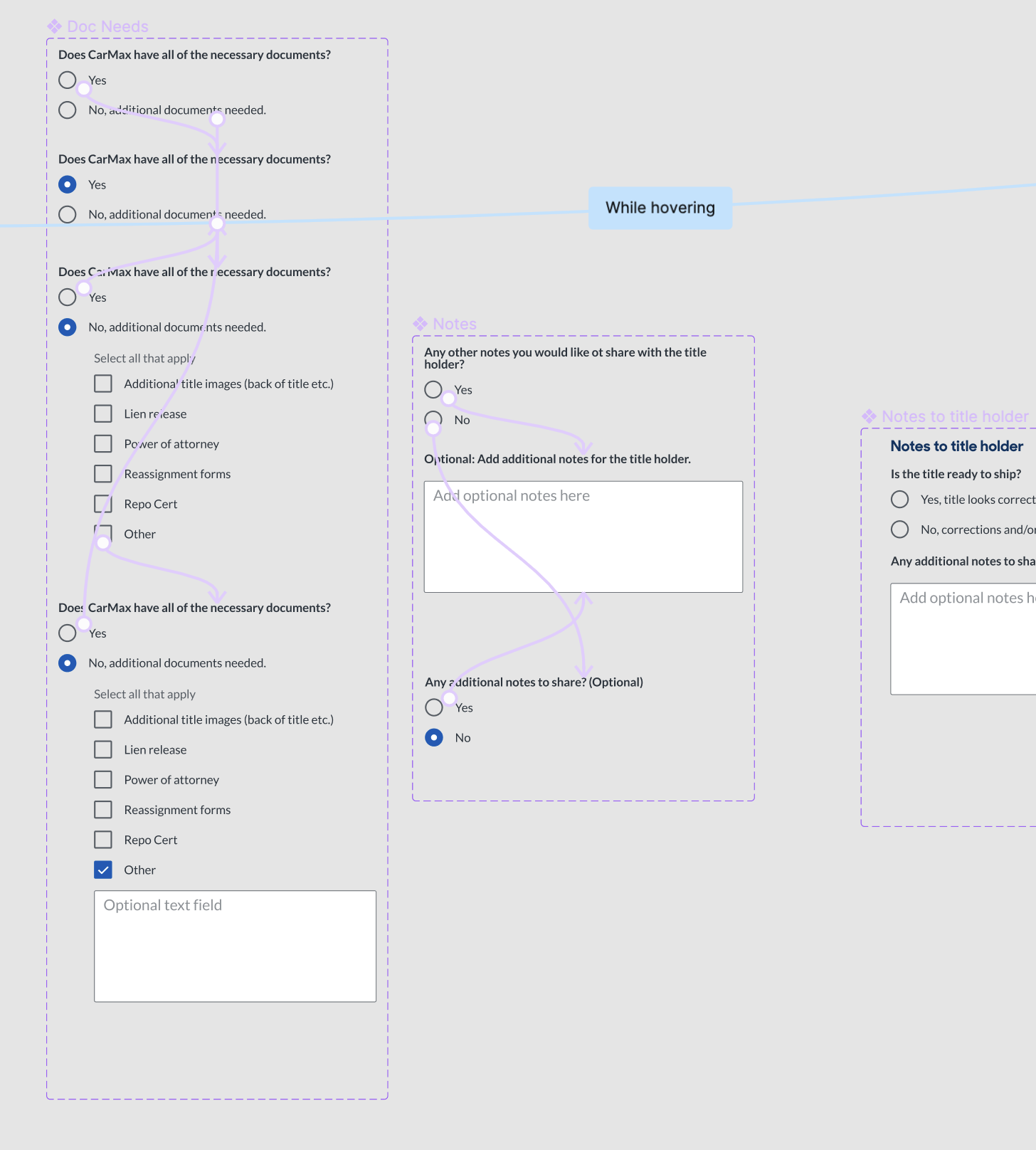
Pixel- perfect design delivery for developers
My approach to design involves developers at every stage of the process - from initial discovery, to solution ideation - they are with me to determine the level of effort, feasibility, and be a collaborative partner along the way. However, when it comes time for file delivery I am intentional about communicating clear guidelines around spacing, font, HEX colors, and interactions. This not only helps developers but is also helpful when testing in QA.