Centralized Navigation
When I was added to the MaxOffer team, the tool had found product market fit, however, through customer discovery we found gaps in the user experience that prevented the tool from scaling to its fullest capacity.
Highlights
Information architecture design, navigation design, qualitative interviews, card sort surveys, design system contributions, high-fidelity prototypes, clean file delivery.
What is MaxOffer?
MaxOffer is a rapidly growing product on CarMax’s supply side of their business. The tool allows dealers to appraise vehicles and instantly sell unwanted vehicles to CarMax.


My role

Yup, that’s me. 👋 As the Lead Product Designer on MaxOffer at CarMax, I executed every step of the design process from research, discovery, and prototyping, to high-fidelity designs in Figma.
My approach
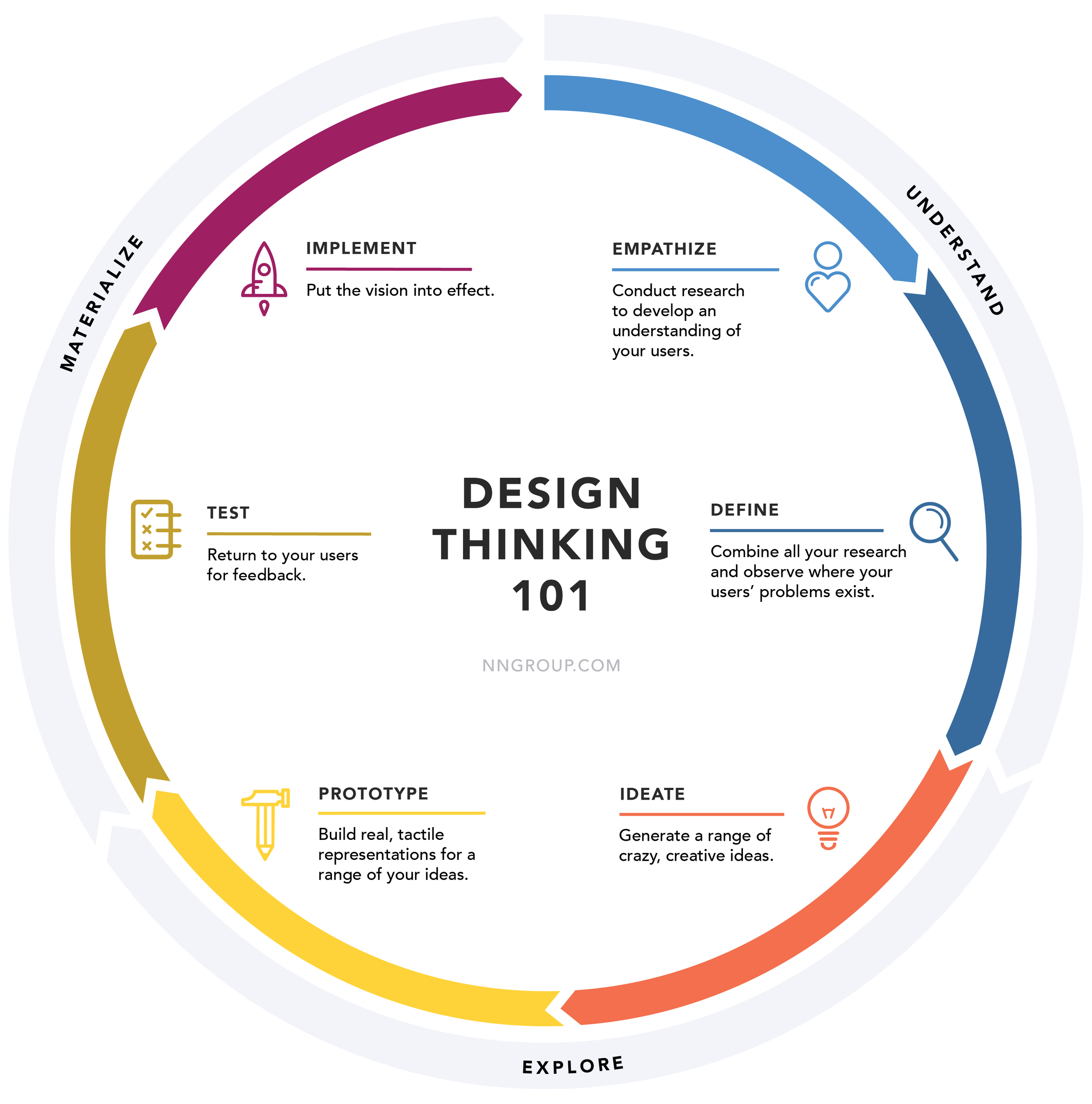
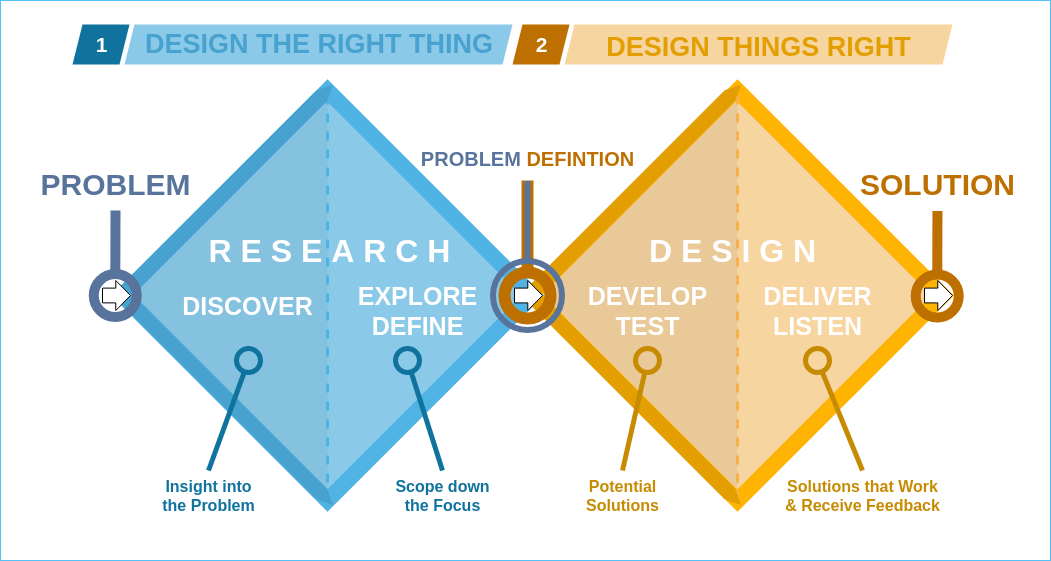
Like many digital products, MaxOffer has a long list of opportunity spaces. Using continuous discovery and design thinking strategies, my team and I rapidly delivered value while building a roadmap for its future success.
Before
After


How we got there
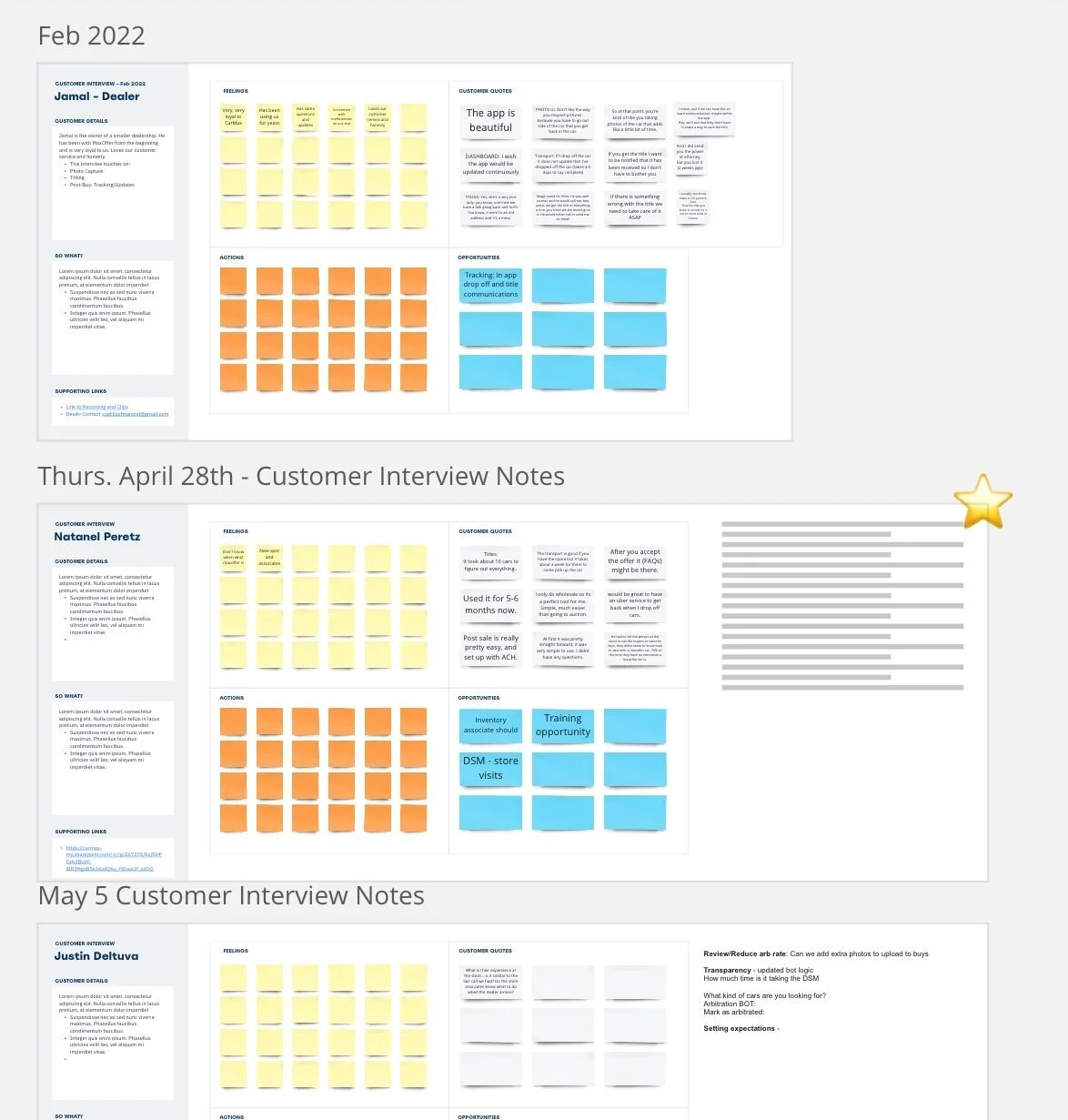
What came up over-and-over again in my weekly discovery calls was dealers’ frustration with the fulfillment process after they sold us a vehicle, a large part of their journey. So, everything from pick up and drop off of the vehicle to title fulfillment, and even payment tracking and execution.

“It’s all just floating in the air ”
“You need a better solution to track payment and title status in real-time to make sure the title is filled out correctly. I often email but never get a reply.”
“The same thing you see on your side, I should be able to see on mine”
“There’s no point of reference for me to know, “Did you get the title? Is this car accepted? Is this one declined? When is payment?” You just have to keep refreshing and hoping that new information appears.”
“We’ve been calling to get more up-to-date information”
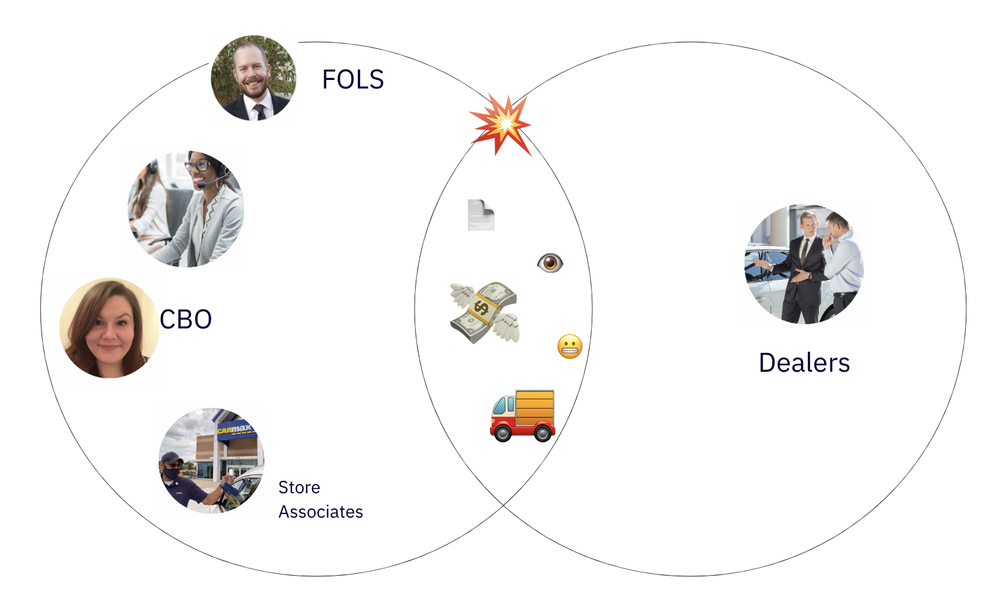
Dealer pain points = CarMax pain points
In my biweekly conversations with our internal CarMax support teams, I identified a pattern in pain points along the journey. When dealers were confused or frustrated they picked up the phone and called Carmax for support. This directly impacted the tools’ operational costs and scalability of the product.
Synthesized results:
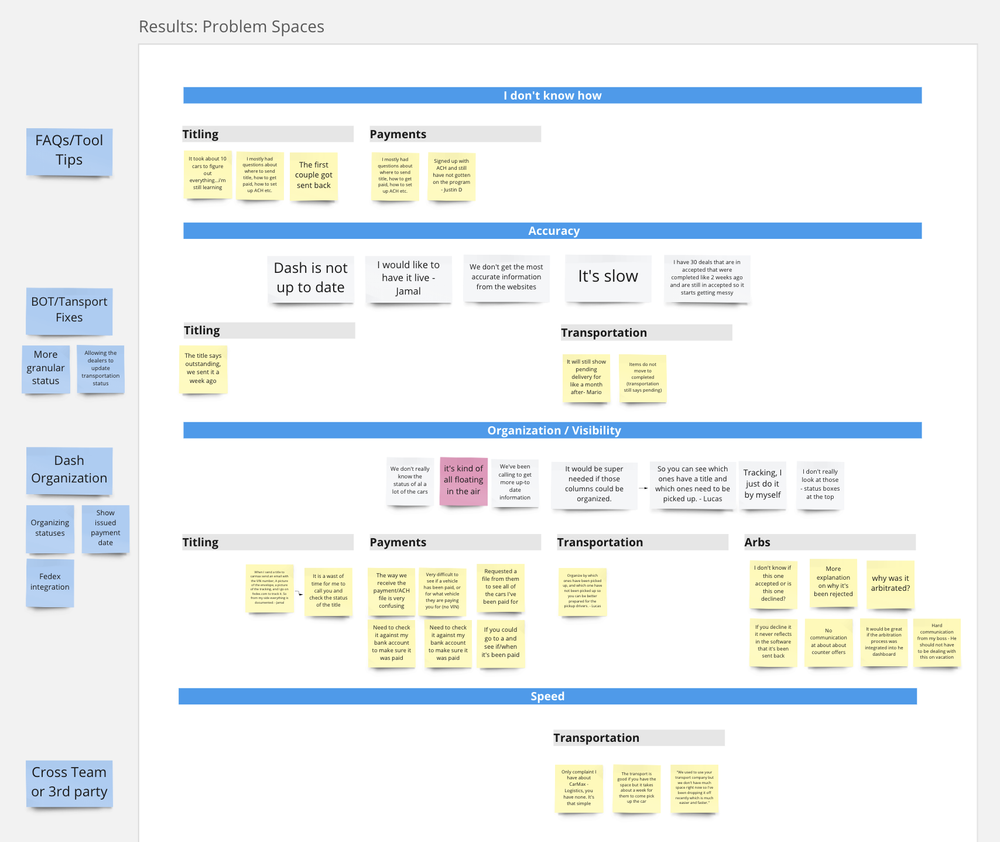
By consolidating research, notes, and data, I was able to identify four core opportunity areas.
Knowledge gaps - “I don’t know how to”
Data inaccuracy - “These statuses are incorrect”
Lack of visibility - “I don't know where I am in the process”
Slow, manual process - “I wish I could do it myself/it should happen faster”
Ideate

How might we put dealers in the cockpit?
How can we give dealers control, visibility, and self-service tools that allow them to seamlessly progress from offer to fulfillment?
Team workshops
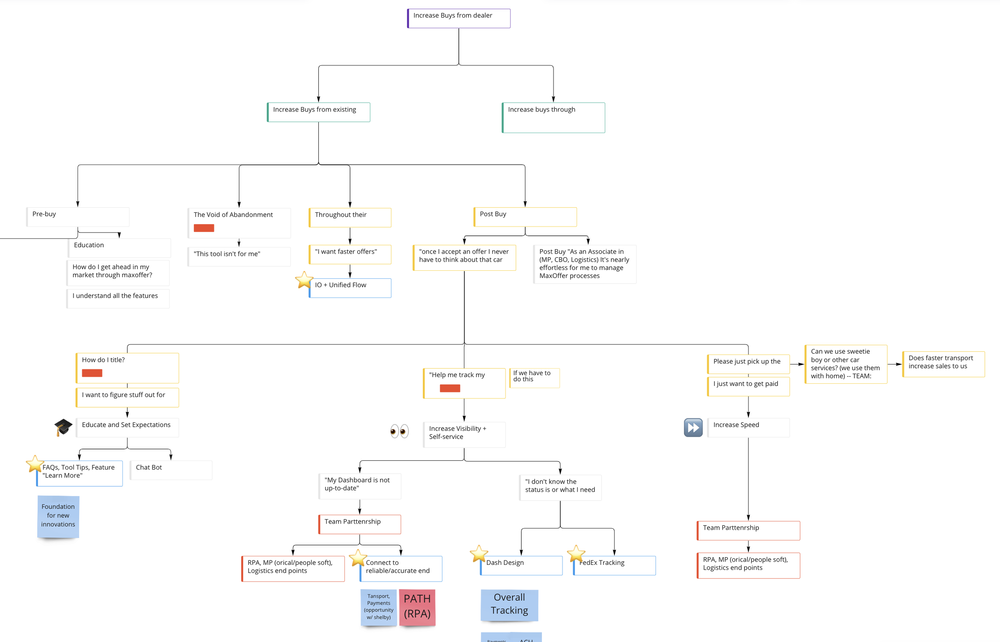
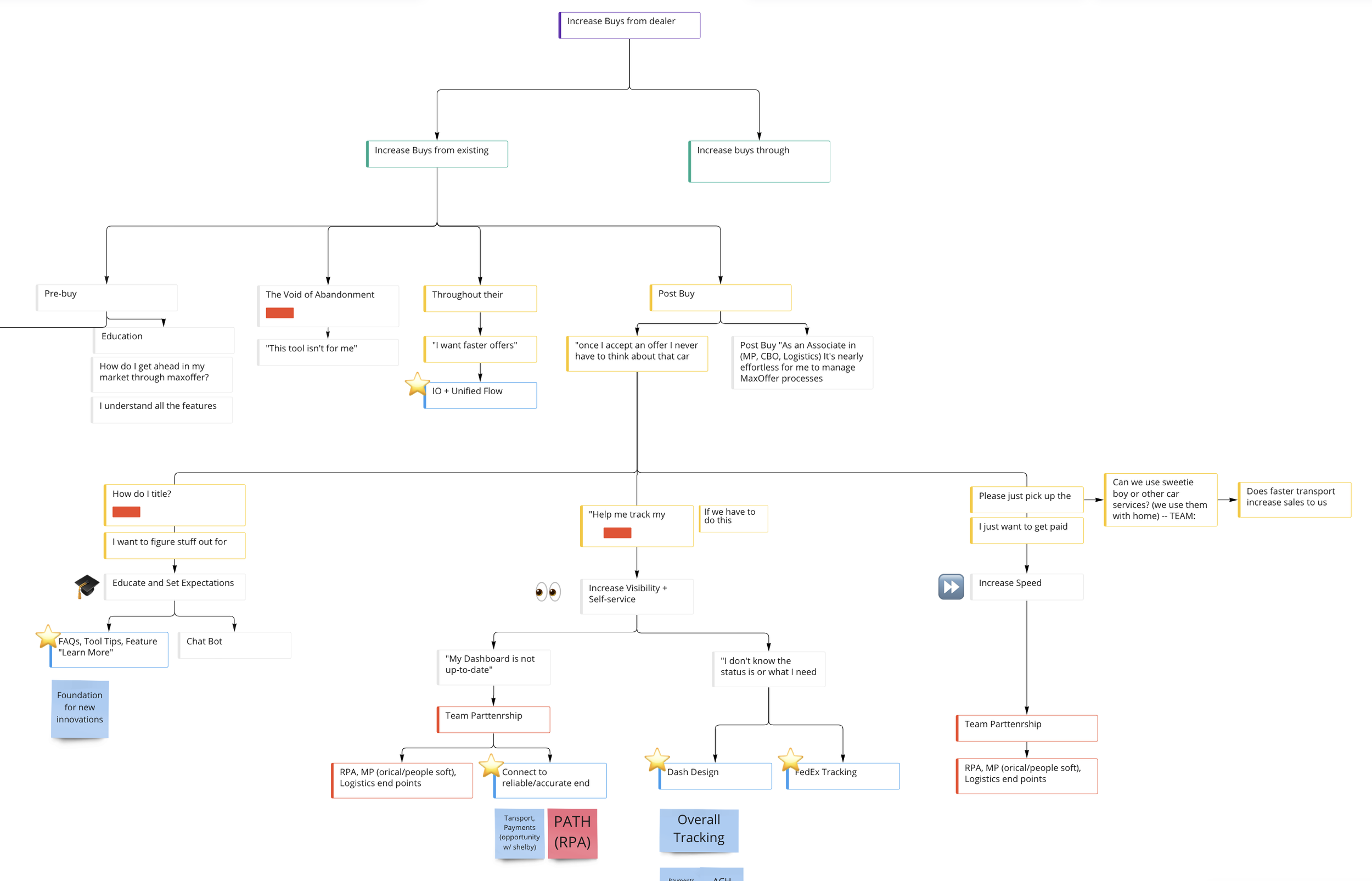
Armed with data and insights, I lead our team through an Opportunity Solutions Tree workshops to lay out opportunity spaces and define solutions.
As a part of the workshop, we mapped out an effort, impact matrix to determine quick, low-effort solutions and roadmap higher-effort long-term goals for the product.
Design solutions
Based on our workshops we identified low-effort, high-impact solutions to quickly support our users - all following their own Design Thinking workflows, with prototypes, tests, and iterations.
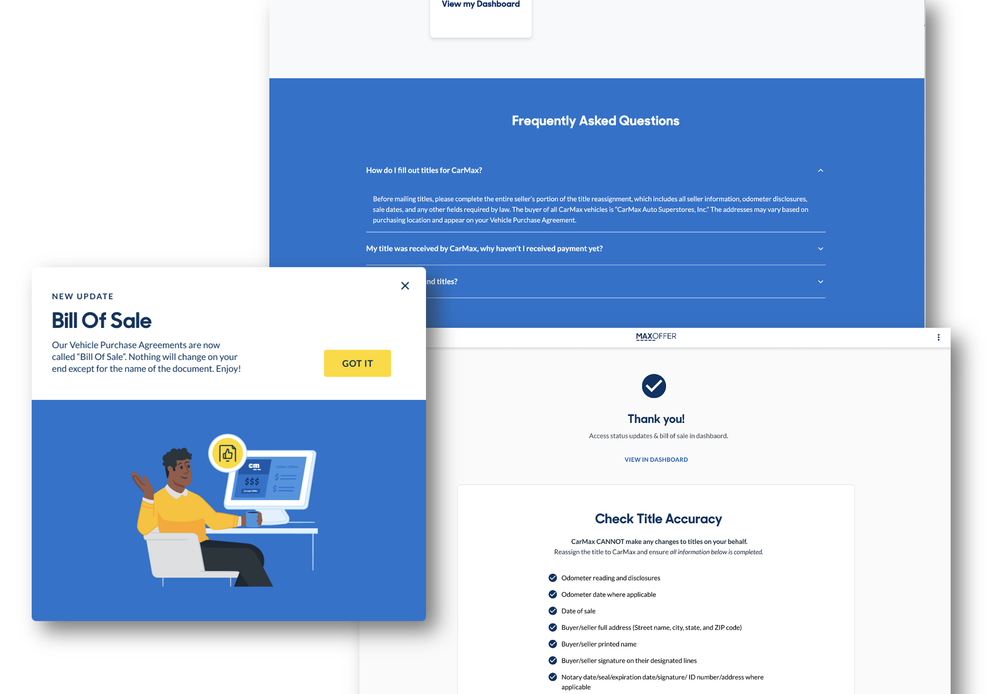
🎓Education
Problem: Knowledge gaps - “I don’t know how to”
Solution: Designed Tooltips, FAQs, and Title accuracy tips at key points along their journey.
Read the full Remote Title Review case study here.
👀 Visibility
Problem: Data inaccuracy issues - “These status are incorrect”
Solution: Collaborated with the Principle Engineer and Product Manager to priortize dashboard accuracy to give dealers accurate title, transportation, and payment statuses.

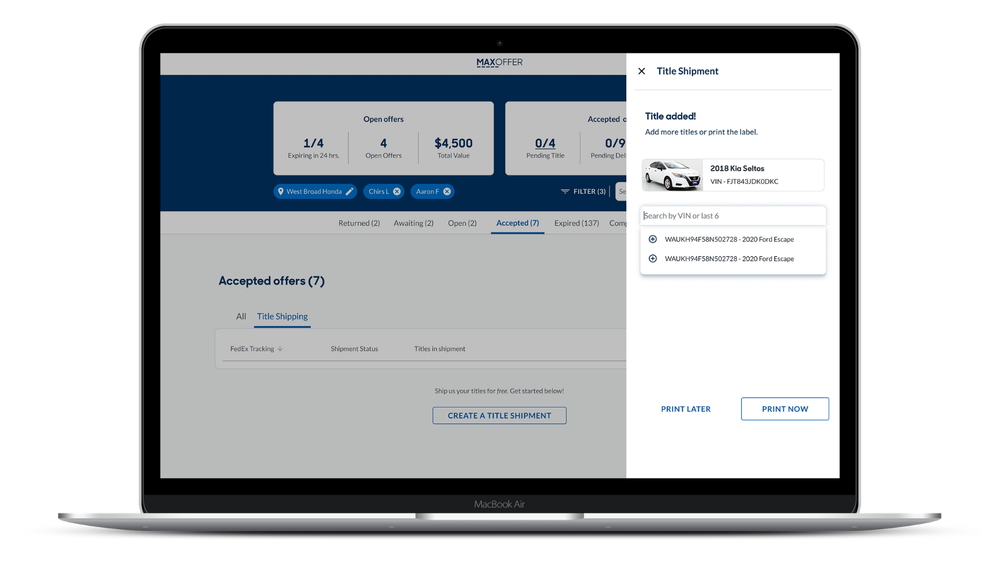
✍🏽 Self-Service
Problem: Speed of execution - “I wish I could do it myself”
Solution: Designed self-service features that allow dealers to self-progress without the support of associates.
Read the full FedEx case study here.
Information architecture needs
While the current tool worked well as a progressed MVP, the lack of centralized navigation and standard self-service features limited MaxOffer’s ability to evolve.

Innitial design issues
No centralized navigation
No architecture to support self-service features like:
Account management
Help Center
Analytics tracking
Required hands-on training to use and navigate
Pattern exploration
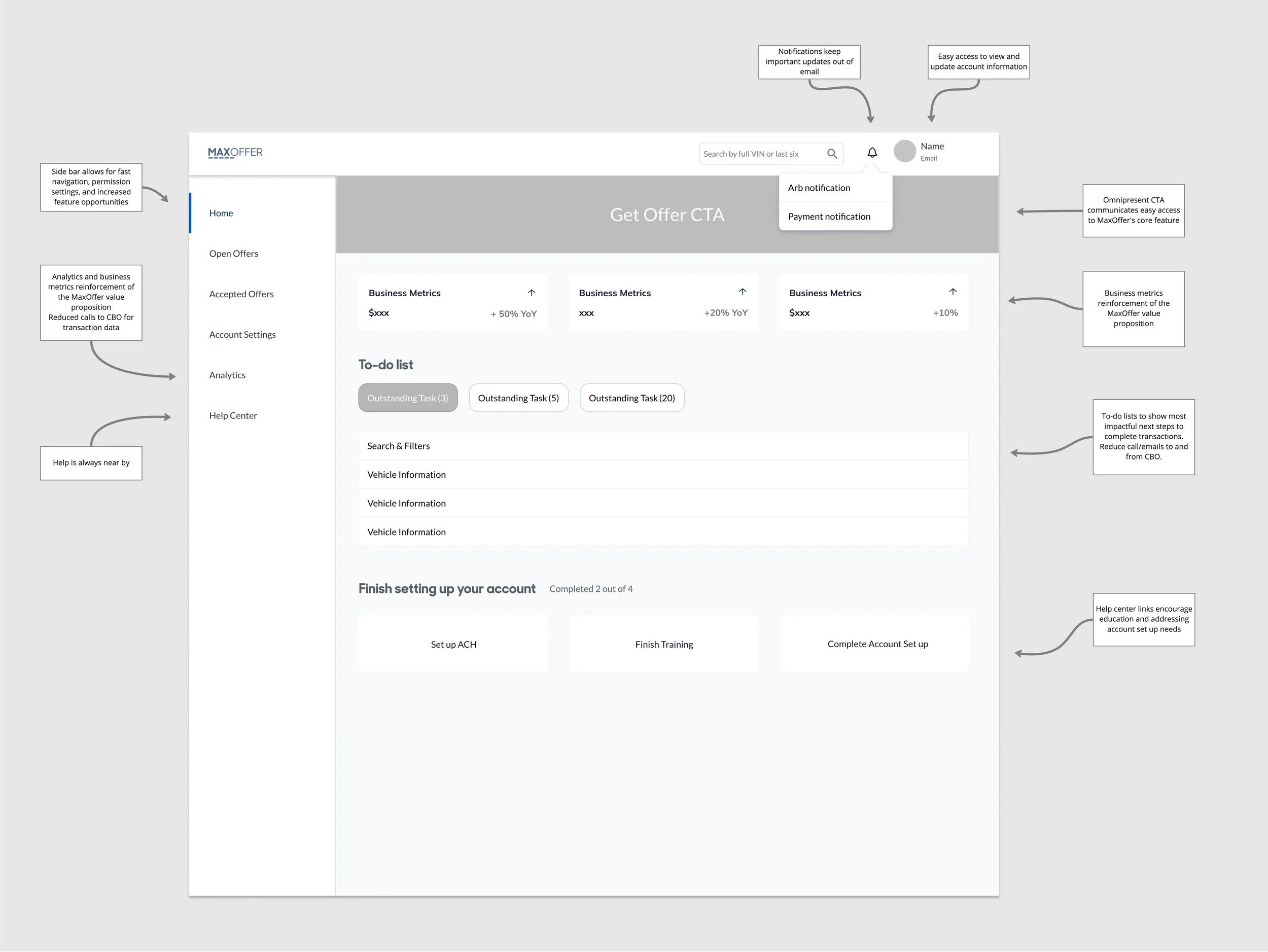
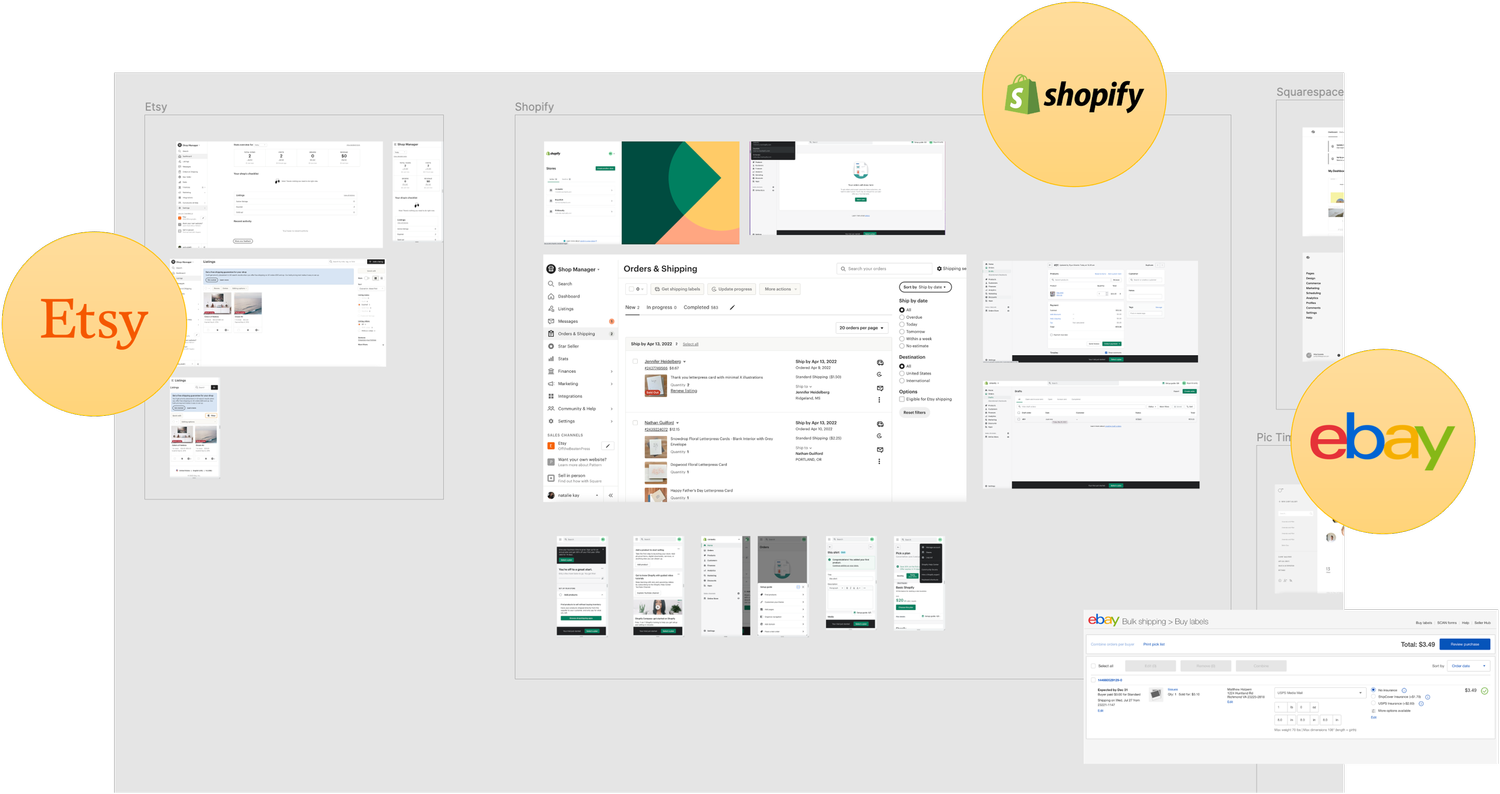
Synthesized B2B dashboard best practices:
Side navigation giving users a way to easily navigate and accomplish tasks within the tool.
Self-service tools including account management pages, onboarding guides, and training.
To-do lists and advanced filtering to keep users on track as they complete an order.
Analytics tools to view metrics and advanced accounting/payment data.
Information architecture research
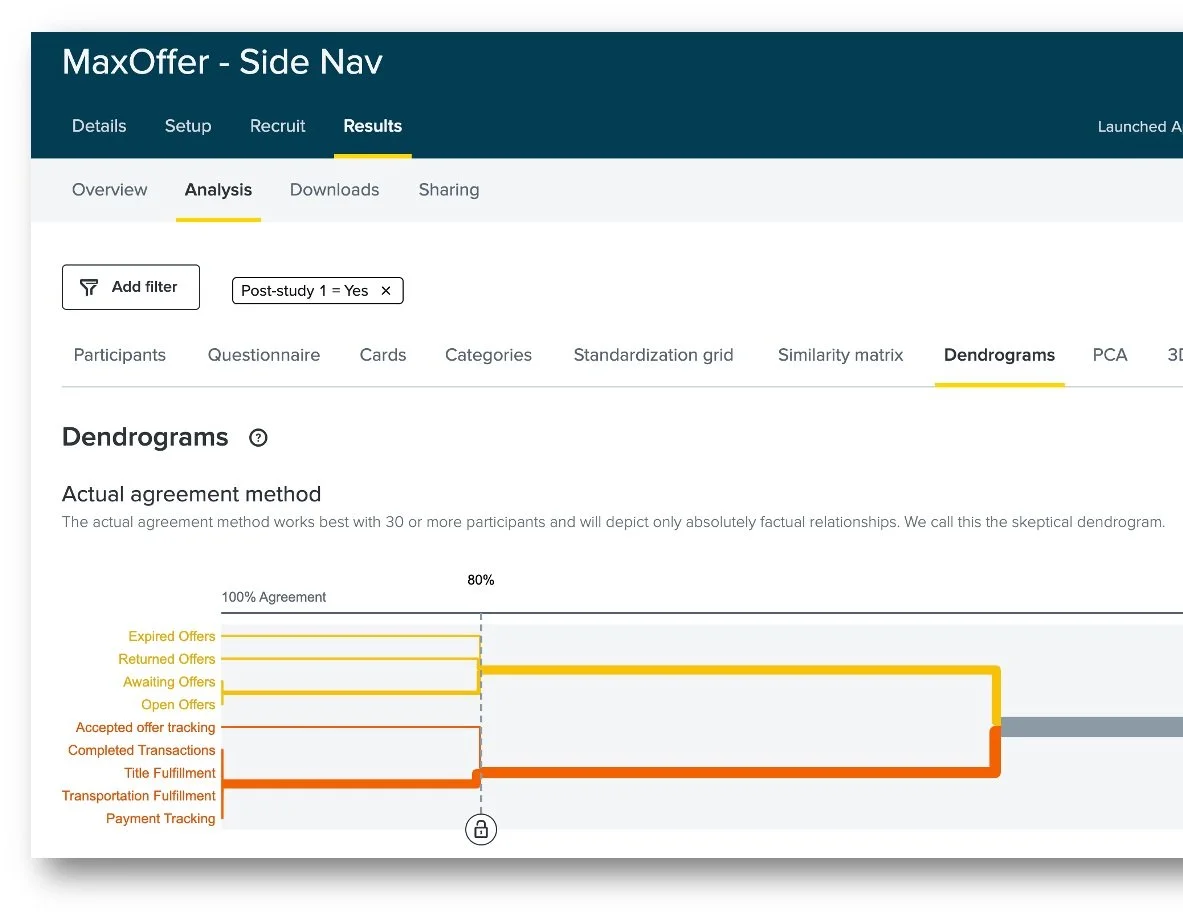
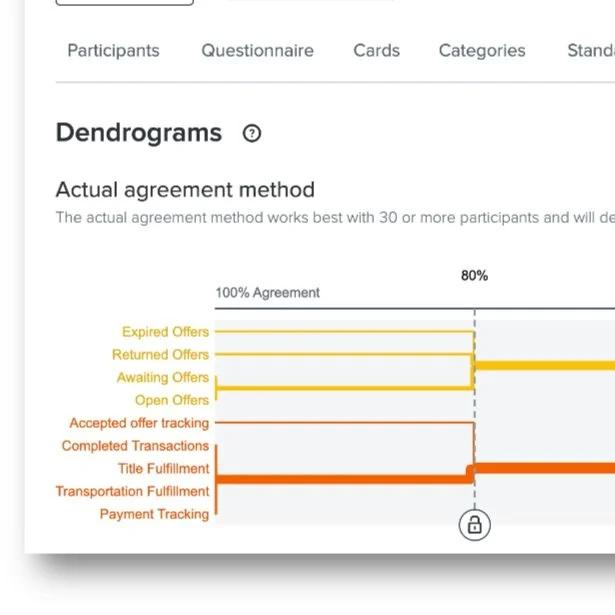
Card sorting surveys paired with qualitative discovery calls and visits allowed me to understand our users’ existing heuristics for organizing data.
We found that dealers think about their data in two distinct buckets: “Offers” and “Sold Vehicles”.
Final designs
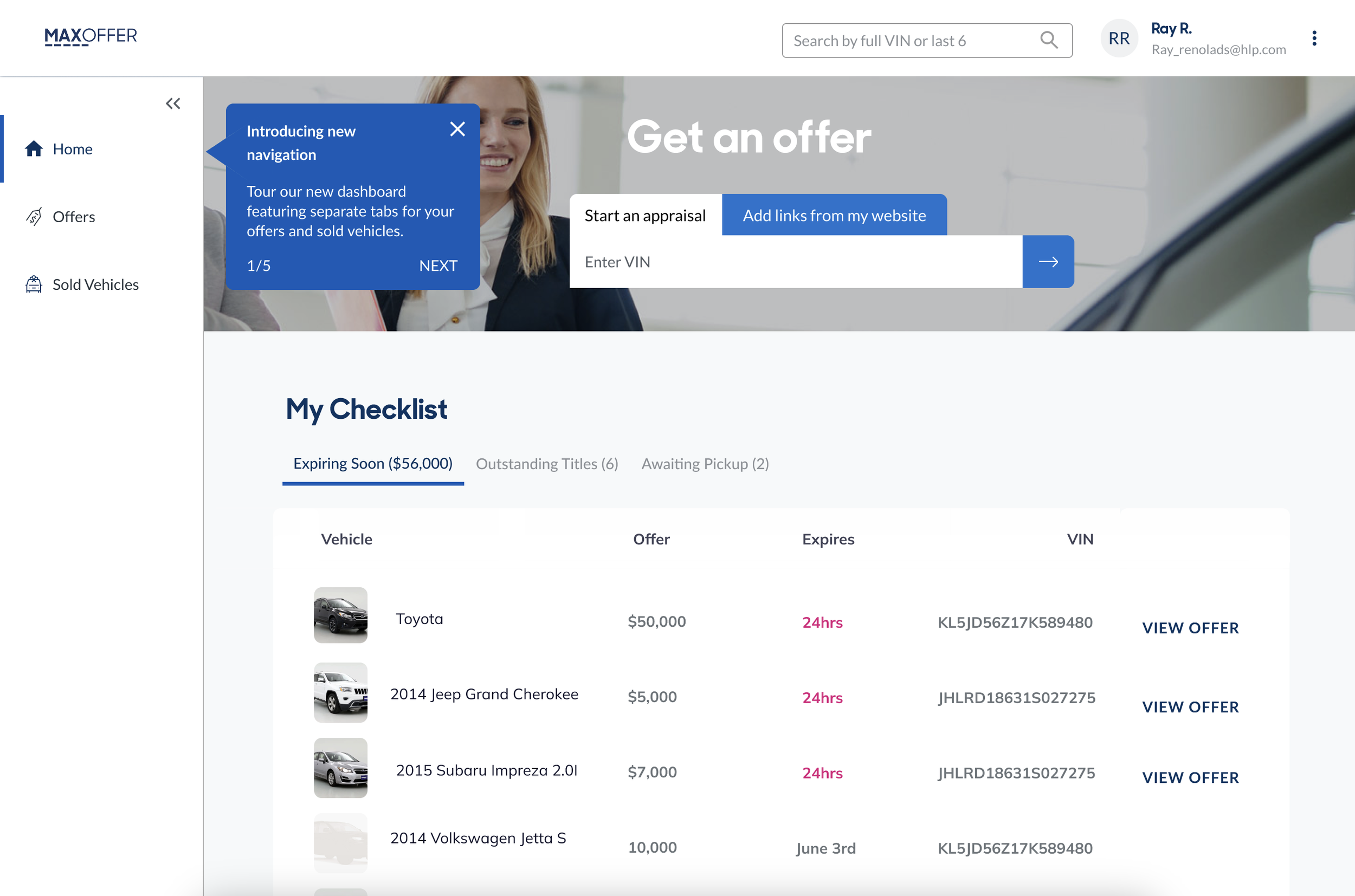
Introduced a centralized side-navigation with an intuitive information architecture that matched dealers’ existing heuristics
Introduced an app-like, mobile-first design with a bottom navigation tool bar
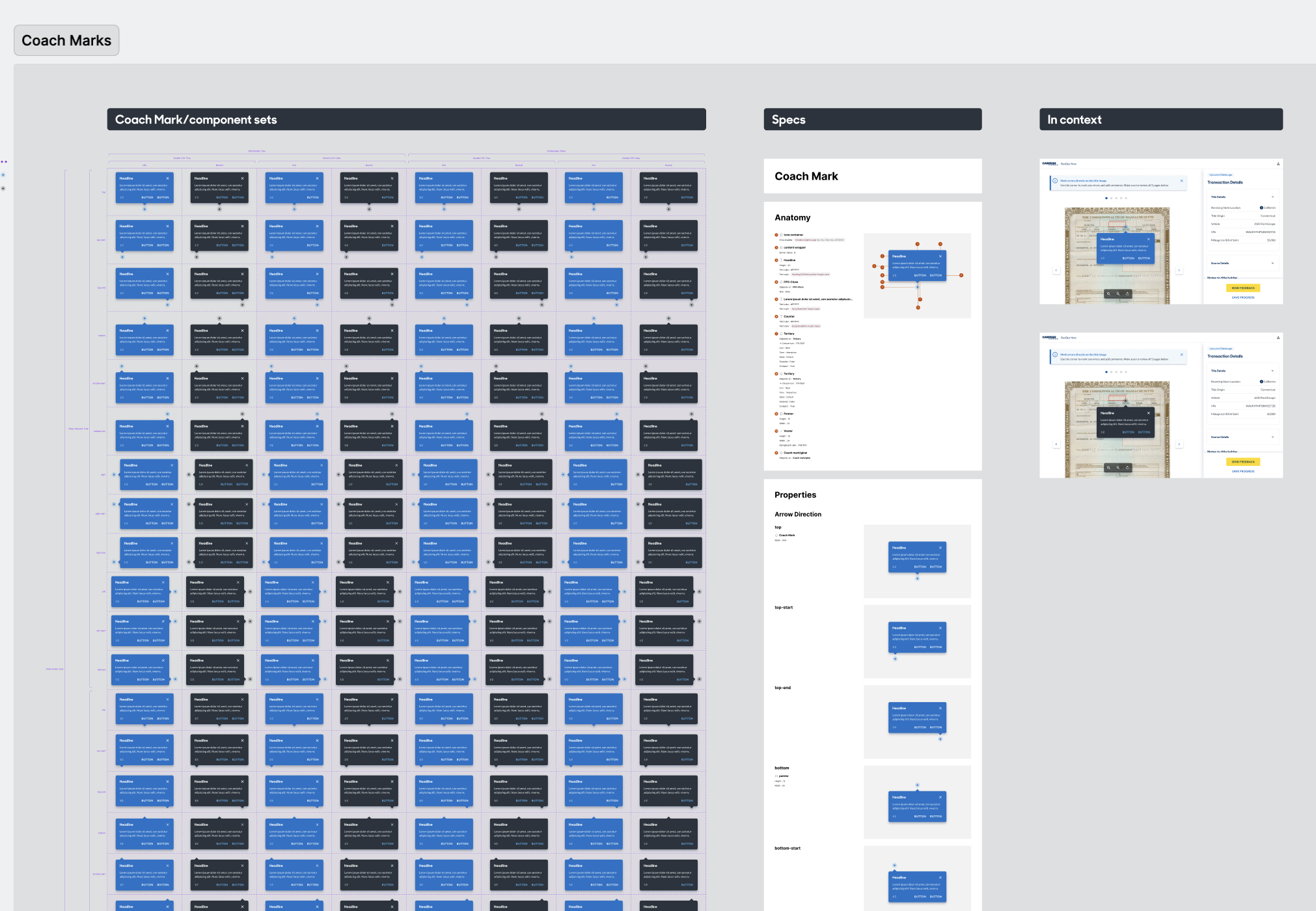
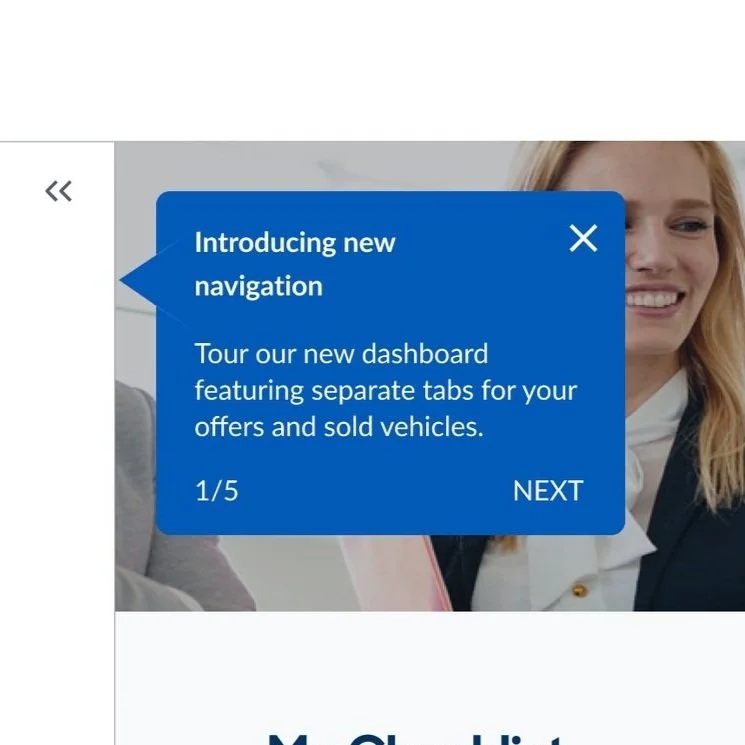
Coach marks to announce the change and guide users through the application
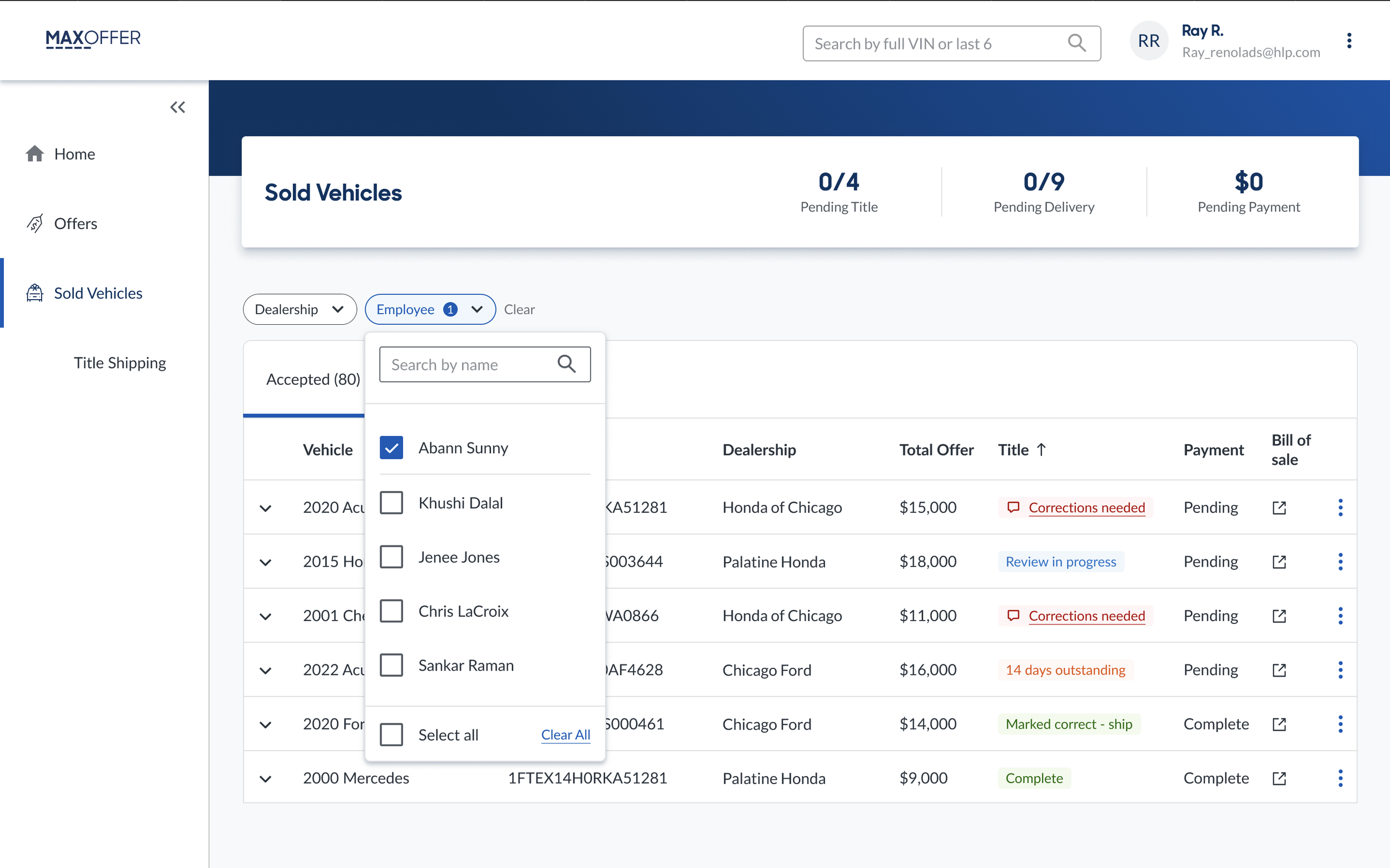
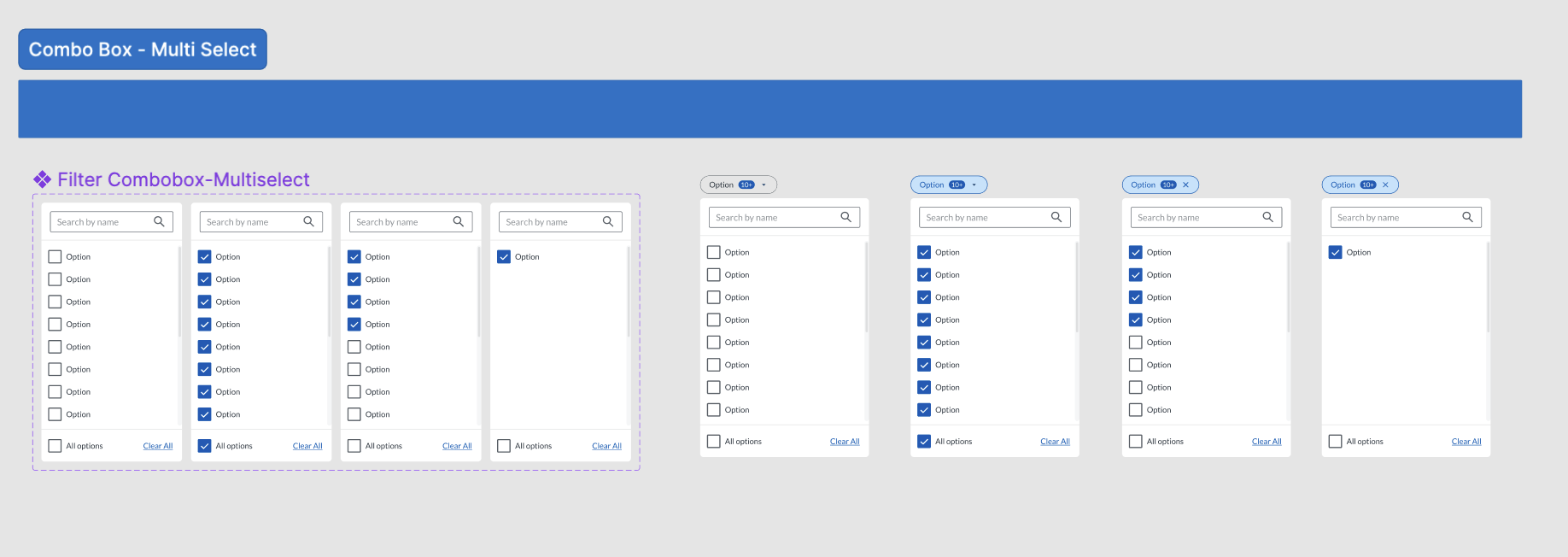
Data table search and filter (design and pattern)
Design pattern and component contributions to the CarMax Design System leveraging atomic design principles
Side Navigation
Data table search and filter pattern
After extensive pattern research, I created a data table search and filter design in Figam and refined the pattern with our design systems team to contribute back to the product org as a whole.
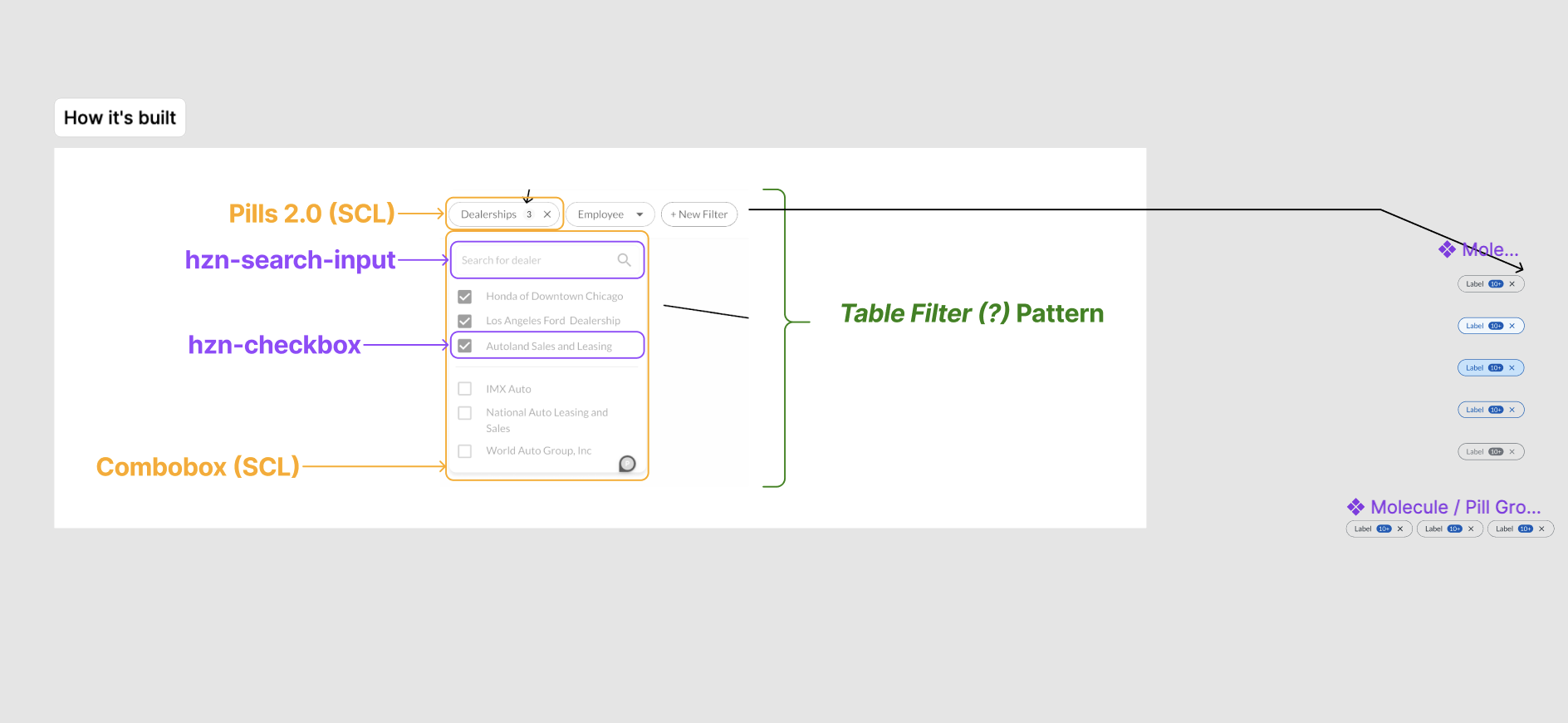
Design system pattern contributions
Mobile-first design experience
Guided coach-marks for scalable feature releases
Design system pattern contributions